




Advertisement
In our pursuit of flawless skin, we often forget that scars are the body's natural way of healing and protecting us. They keep infection-causing microbes out, and sometimes the skin goes into overdrive, forming raised scars known as keloids. But is there anything you can do to minimise a scar's appearance? We asked dermatologists to explain how scars form, which over-the-counter products actually work, and what to avoid.
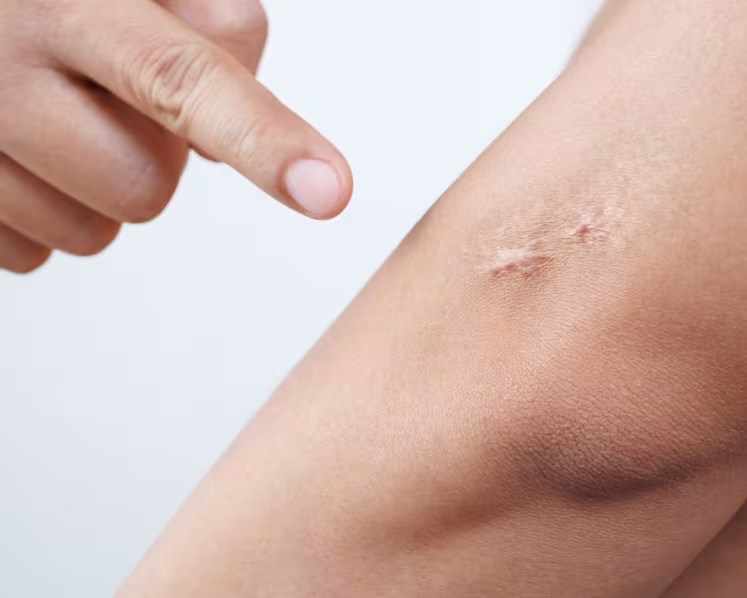
How do scars form in the first place?
Scars form when the skin grows new tissue – primarily a protein called collagen – to pull the wound together and fill gaps caused by an injury. How a scar looks depends on factors such as wound depth, injury type, and location.
"The deeper the injury extends into the dermis, the greater the chances of scarring," says Dr Suzanne Cheng, senior consultant at the National Skin Centre. Jagged lacerations, crush injuries and burns are more likely to scar than clean surgical cuts. The face generally heals better because it has excellent blood supply, while areas like the legs, chest and shoulders tend to heal more slowly and are more prone to noticeable scars.
Your skin tone and type also play a role. "Individuals with darker skin types are more prone to hyperpigmented scars," says Dr Eileen Tan, dermatologist at Eileen Tan Skin Clinic & Associates. Physiological changes such as menopause can also slow healing.
Interestingly, younger skin isn't necessarily less prone to scarring. "Younger skin heals more vigorously but is also more prone to producing excessive collagen," says Dr Gerard Ee, founder of The Clifford Clinic. "Raised scars such as hypertrophic scars and keloids are more common in younger individuals, most frequently seen between ages 10 and 30."
Why do acne and chickenpox always leave scars?
Severe and prolonged inflammation in acne destroys collagen and forms fibrotic bands that tether the skin, resulting in atrophic scars. "Picking or squeezing pustules significantly increases this damage," says Dr Ee. In chickenpox, severe skin inflammation damages deeper layers, and scratching can deepen tissue damage, increasing the likelihood of pockmarks.
Do pet scratches or insect bites create scars?
Superficial wounds should heal without scarring. However, injuries on joints like knees or elbows tend to heal slower and have a higher tendency to develop hypertrophic or keloid scars. Insect bites that cause intense inflammation can lead to scarring, and pet scratches carry a higher risk of infection, which prolongs inflammation and increases the likelihood of noticeable scarring.
If surgical cuts leave scars, how does plastic surgery work?
All surgery creates a new scar. Caesarean sections, for example, are bound to result in scars. Still, surgical incisions generally produce better scars due to careful technique and sterile conditions.
While plastic surgery can't completely remove scars, it can improve them. "What we are really performing is scar revision – replacing a poor-quality scar with one that is flatter, smoother and less noticeable," says Dr Cheng.
Why do new wounds respond better to treatment?
Wound healing occurs in three phases: inflammatory, proliferative, and remodelling. The remodelling phase starts about two to three weeks after a wound closes and continues for up to a year. "This is the period when scar-minimising treatments are most effective," says Dr Ee.
When is a scar considered old?
A scar is immature if it appears red, raised, itchy or continues to change. Once it matures, usually after about 12 months, collagen fibres become more densely cross-linked and blood supply decreases. "Treatments can still improve old scars, but the degree of improvement is generally less than if started earlier," says Dr Cheng. However, Dr Ee notes that "modern treatments can substantially improve the colour, texture and thickness of mature scars."
How effective are over-the-counter products?
Silicone patches and sheets These hold the skin steady and prevent wound edges from being pulled apart. For raised scars, they reduce blood flow to help flatten the scar. Use them 12 to 24 hours daily for two to three months.
Effectiveness: Strongest evidence among over-the-counter products for raised scars. Multiple trials support their use in reducing scar thickness, redness and itch.
Petroleum jelly Keeps fresh wounds moist to reduce scab formation and support faster healing. Best used while the wound is healing, not for treating established scars.
Vitamin E Despite its popularity, clinical evidence is weak and inconsistent. Several studies show little to no improvement compared with placebo, and some users develop allergic contact dermatitis.
Topical steroids Suppress inflammation and limit excessive collagen production. Over-the-counter preparations have limited penetration; stronger prescription steroids require medical supervision due to risks of skin thinning and pigment changes. Steroid injections are more effective for raised scars.
Retinoids Increase skin cell turnover and stimulate collagen production, useful for improving post-acne pigmentation. They do not improve atrophic scars and should never be applied to open wounds.
Exfoliants (AHAs/BHAs) Improve surface texture and fade pigmentation but do not penetrate deeply enough to remodel dermal collagen. Not effective for raised or deep scars.
Aloe vera Has moisturising and anti-inflammatory properties but little evidence that it improves scars. May be used as a complementary moisturiser but should not replace silicone-based treatments.
The bottom line
Silicone sheets have the strongest evidence for fading raised scars, especially when used early. Steroid injections are dramatically more effective for keloids. Petroleum jelly helps fresh wounds heal with minimal scarring. Vitamin E and aloe vera offer little proven benefit for established scars. For best results, start treatment early, be consistent, and consult a dermatologist for prescription-strength options.
 Watch AD Unlock More
Advertisement


Advertisement


Advertisement


Advertisement