




Advertisement
After you've lived in a house for a while, you tend to accumulate tools based on the particular maintenance and remodeling chores the house needs. You don't necessarily know what those are when you're first moving in, though, and it's a waste of money buying tools you aren't going to need on a regular basis.
When I moved into my house twenty years ago, all the floors needed to be redone. I already had most of the tools I needed from my job as a flooring installer, and it's a good thing too, because they were expensive. I'm glad I didn't have to buy them because, as it turns out, I haven't used most of them since finishing the floors.
As far as remodeler Daniel Cabrera is concerned, new homeowners should purchase a basic set of tools when moving in, and for the next two years, they should rent or borrow everything else. That might sound a little extreme, and it begs the question of what constitutes a basic set of tools. While the answer won't be the same for everyone, Cabrera recommends a "starter kit" that costs about $250. Here's what's in this starter kit as well as other tools you might want to buy, based on your situation, and which you're better off borrowing or renting.
Starter Tool Kit – BUY
"The average homeowner will require just five tools on a regular basis," says Cabrera. They are:
20V cordless drill
16-ft. tape measure
16-oz. hammer
Stud finder
24-inch level
Based on my experience of moving into several new homes, I would add a few more tools to round out your starter kit:
Multi-bit screwdriver
Socket wrench set
Cordless circular saw
Pliers (slip joint and regular)
Utility knife
Caulking gun
These are all tools you'll use often, and you'll probably need some of them right away.
Ladders – BUY
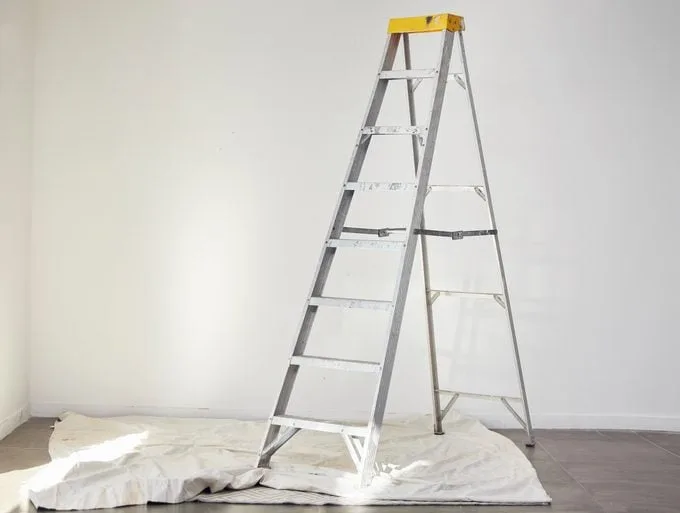
You will need a 6- or 8-foot stepladder at some point, and you'll also need an extension ladder if you have to work on the siding or roof. Ladders are essential tools, and while you might be able to borrow one, consider the hassle of transporting it when you don't have a truck or a roof rack for your car. Better to purchase the ladders you need at the get-go, so they're there when you need them.
Table Saw and Other Power Tools – BORROW
A table saw is an important tool if you're working with wood, but unless you're sure you're going to need it regularly, it will be an unnecessary expense, and you'll have to find a place to store it. The same goes for most other power tools, excluding a circular saw and drill. Wait to see how often you actually need a particular tool, like a belt sander, miter saw or router, before you buy one — and borrow until you buy.
Power Washer – BORROW
At some point, you may need to use a power washer on a regular basis, but probably not when you first move in. If it turns out the deck, sidewalk, or siding needs a good cleaning (and you have time for that amidst all the chaos of moving in), you'll save money and storage space by borrowing one from a friend. If none of your friends or neighbors has one, renting can be a money-saving option for a single use. Renting a power washer costs between $40 to $100 per weekend versus $300 to $1,500 to purchase, and rental companies have more advanced equipment than homeowners.
Hand Lawn and Garden Tools – BUY
A basic collection of new lawn and garden tools doesn't cost that much — you may even be able to find what you need at a thrift store — and you'll be glad you have them. Plants don't stop growing when a house changes hands, nor do trees stop dropping leaves. Here's what you usually find in a basic collection:
Digging shovel with a rounded blade
Spade shovel for weeding and planting
Soil rake for the garden
Leaf rake
Set of pruning shears
Lawn Mower – BUY
If your new house has a lawn, you have to mow it regularly to keep it healthy. It may make sense to borrow your neighbour's mower for the first cut, especially if the grass is overgrown when you move in. Eventually, however, you're going to need your own mower if you want your new property to look good. The sooner you have one and know how to use it, the sooner you can establish a mowing routine that's good for the grass, so go ahead and buy one.
Power Lawn and Garden Tools – BORROW
Power lawn and garden tools other than lawn mowers — like hedge trimmers, weed whackers, power augers, chainsaws and cultivators — have very specific uses and might see action only once or twice a year. You have to find storage space for them, and if they run on gasoline, you have to empty them or treat the gas with stabilizer before storage to prevent startup failure. That's a lot of trouble you can save by borrowing the tools you need from a neighbour, friend or family member until you identify a recurring need for a particular tool.
Toilet Plunger and Auger – BUY
When your toilet backs up — and it will happen — you don't want to count on a neighbour, who might not even be home. Every bathroom should have clog-clearing tools at the ready, because a toilet backup can be an emergency. A plunger is more important than a snake, but you need both, so go ahead and buy them right away.
Final Thoughts
Buying a home is exciting, but it comes with a long list of new responsibilities — and tools are part of that. By investing in a basic starter kit and borrowing specialized equipment when needed, you can save money, avoid clutter, and still be prepared for most home maintenance tasks. Start with the essentials: a drill, hammer, tape measure, and a few hand tools. Then, as you settle in and discover what your home truly needs, you can add to your collection wisely. Your future self — and your wallet — will thank you.
 Watch AD Unlock More
Advertisement


Advertisement


Advertisement


Advertisement